
Valve reclosing
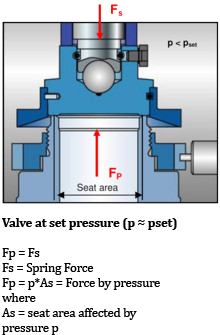
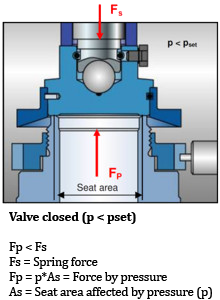
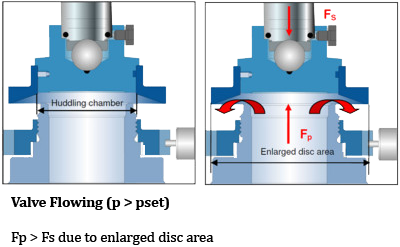
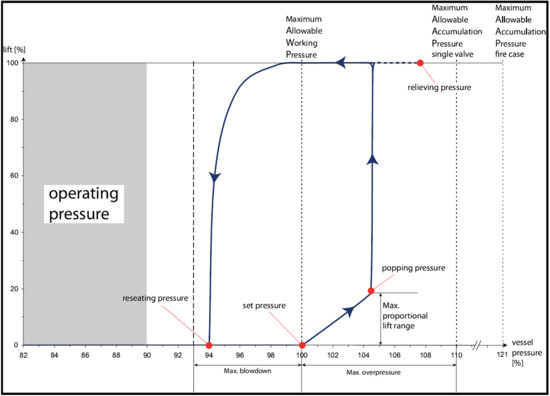
In most applications a properly sized safety valve will decrease the pressure in the vessel when discharging. The pressure in the vessel will decrease at any subsequent point, but not later than the end of the upset situation. A decreasing pressure in the vessel will lower the force Fp. At set pressure however the flow is still acting on the enlarged disc area, which will keep the valve open. A further reduction in pressure is required until the spring force Fs is again greater than Fp and the safety valve begins to reclose. At the reseating pressure the disc will touch the nozzle again and the safety valve recloses. Blowdown is the difference between set pressure and reseating pressure of a safety valve expressed as a percentage of set pressure. Typical blowdown values as defined in codes and standards are -7% and -10%, ranging from -4% to -20% depending on the code and service (steam, gas or liquid).
Functional diagram
The following diagram shows a typical functional curve of a spring loaded safety valve.
Operation of a Series 526 API safety valve with adjusting ring and initial audible discharge set pressure definition.
It is important to understand that the operating pressure of the protected equipment should remain below the reseating pressure of the valve. Most manufacturers and codes and standards recommend a difference of 3 – 5% between reseating pressure and operating pressure to allow proper reseating of the valve and achieve good seat tightness again.


Your local contact person will support you with all questions concerning the safety valve.
