THE FACTORY OF SAFETY VALVES LESER invests in Production expansion
LESER_Hohenwesteht_Factory_Header

Production Expansion in Hohenwestedt Successfully Completed

Approximately 15,000 m² of additional space for growth, innovation, and efficient production

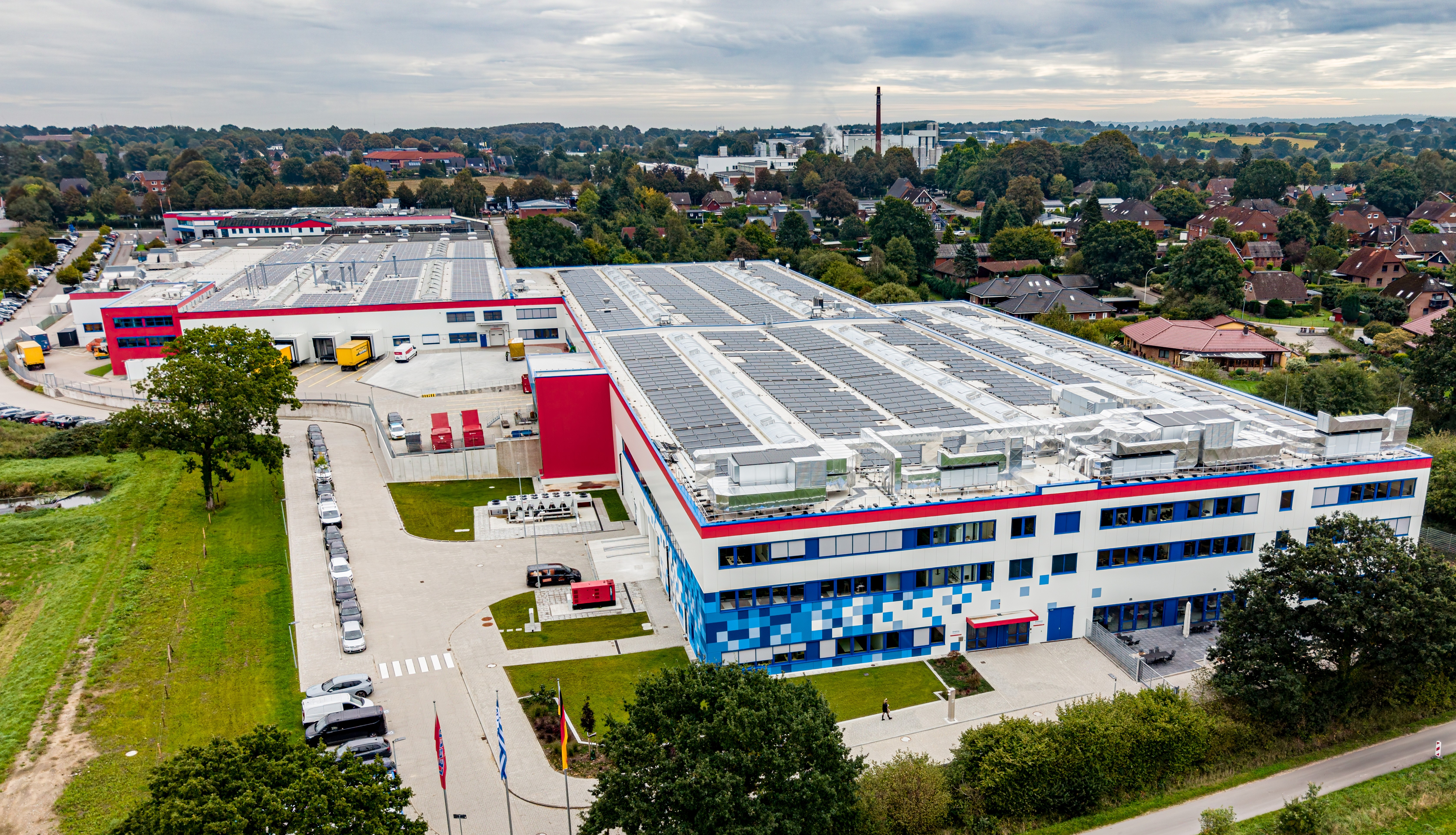
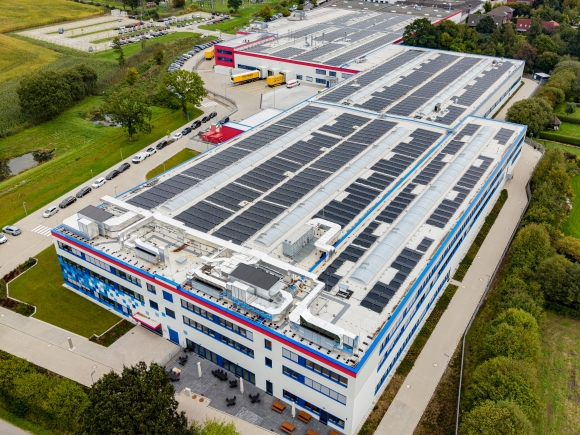
LESER has expanded its production facility in Hohenwestedt (Schleswig-Holstein, Germany) by approximately 15,000 m². Construction began in 2024, and the new production hall was completed in 2026. The move to the new facilities took place in the summer of 2026.

With an investment of approximately 45 million euros, LESER has laid the groundwork for further growth. Modern manufacturing technologies, optimized material flows, and additional production capacity strengthen the Hohenwestedt site and LESER’s competitiveness as one of the world’s leading manufacturers of safety valves.

The completion of this expansion marks an important milestone in the long-term development of the production site. Further expansion phases are planned through 2032, through which LESER aims to lay the groundwork for future growth and continued high-performance production.
Recommended external content

At this point you will find an external content from YouTube that complements the article. You can display it in one click and hide it again.

Show external content

More information about our privacy policy

Learn more about the different focus topics here:

Una de las empresas líderes en el campo de la válvula de seguridads a nivel mundial, a la que los líderes del mercado mundial de la industria del petróleo y el gas también confían sus proyectos.

Una amplia cartera de productos con más de 2 millones de opciones de configuración con todas las homologaciones y certificados para todos los mercados internacionales.

Apoyo continuo a su proyecto a lo largo de todas las fases del mismo para una ejecución transparente y puntual.

Una implementación flexible del proyecto y la posibilidad de acompañar su proyecto en el centro de aceptación del cliente.

LESER growth global

Innovative technologies

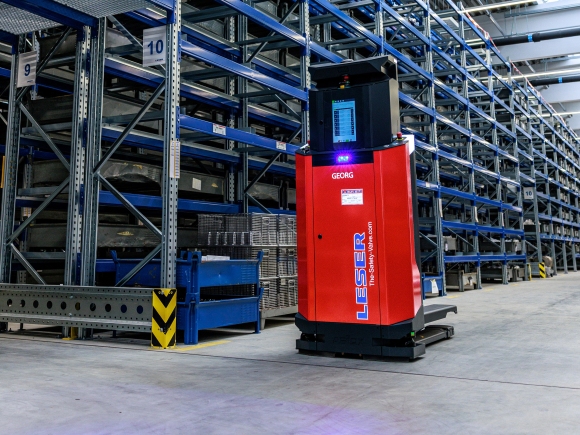
As part of the production expansion, investments will be made not only in the building structure but also in new operating equipment in order to control production processes even more efficiently in the future. In the process, an automated long goods storage system will be built, which will be directly connected to new sawing machines.

Learn more about the modern manufacturing technologies and automated processes in our new production facility.

More Information

Sustainable construction

Energy Supply and Heat Recovery

A comprehensive energy concept focused on energy efficiency and the use of renewable energy sources was implemented for the new building. The building is certified to the KfW-40 standard.
Heat is supplied via an air-to-water heat pump system using low-temperature technology. In addition, heat is recovered from the ventilation system and from production processes.
The hall areas are heated and temperature-controlled using radiant ceiling panels. A supply ventilation system introduces fresh air into the lower part of the hall. Additional heat pumps in the ventilation systems help heat the intake air from outside when temperatures are low.

Solar Power and Self-Consumption

A photovoltaic system consisting of 2,310 modules with an installed capacity of 976 kWp was installed on the new building.
Together with the existing system, the site has an installed photovoltaic capacity of approximately 1,600 kWp. Under favorable generation conditions, this can fully cover current electricity demand. The average self-sufficiency rate is approximately 30%.
Excess solar power can be used to heat water via apower-to-heat application . Hot water for showers and sinks is provided by electric instantaneous water heaters.

Lean material flow

With the new building, internal material flows and logistical processes were restructured. Wide traffic routes, designated staging areas, and a reduced number of high-bay racking aisles form the basis for automated transport processes. The optimized layout of the logistics areas and transport routes contributes to increased efficiency and enables faster, demand-driven material provision.

Fixed drop-off and pickup points have been set up at the machines and equipment. Autonomous mobile robots (AMRs) handle material transport between the production areas and the logistics interfaces.
Systems that are already automatically integrated include chip disposal, parts cleaning, and the Handling-Tech robot cell at Hessapp DVT.
In addition, inventory previously held at off-site warehouses has been returned to the facility. The consolidation of warehousing, material staging, and manufacturing supports the management of internal material supply.

Modern working environment


Office and Meeting Areas Adjacent to Production

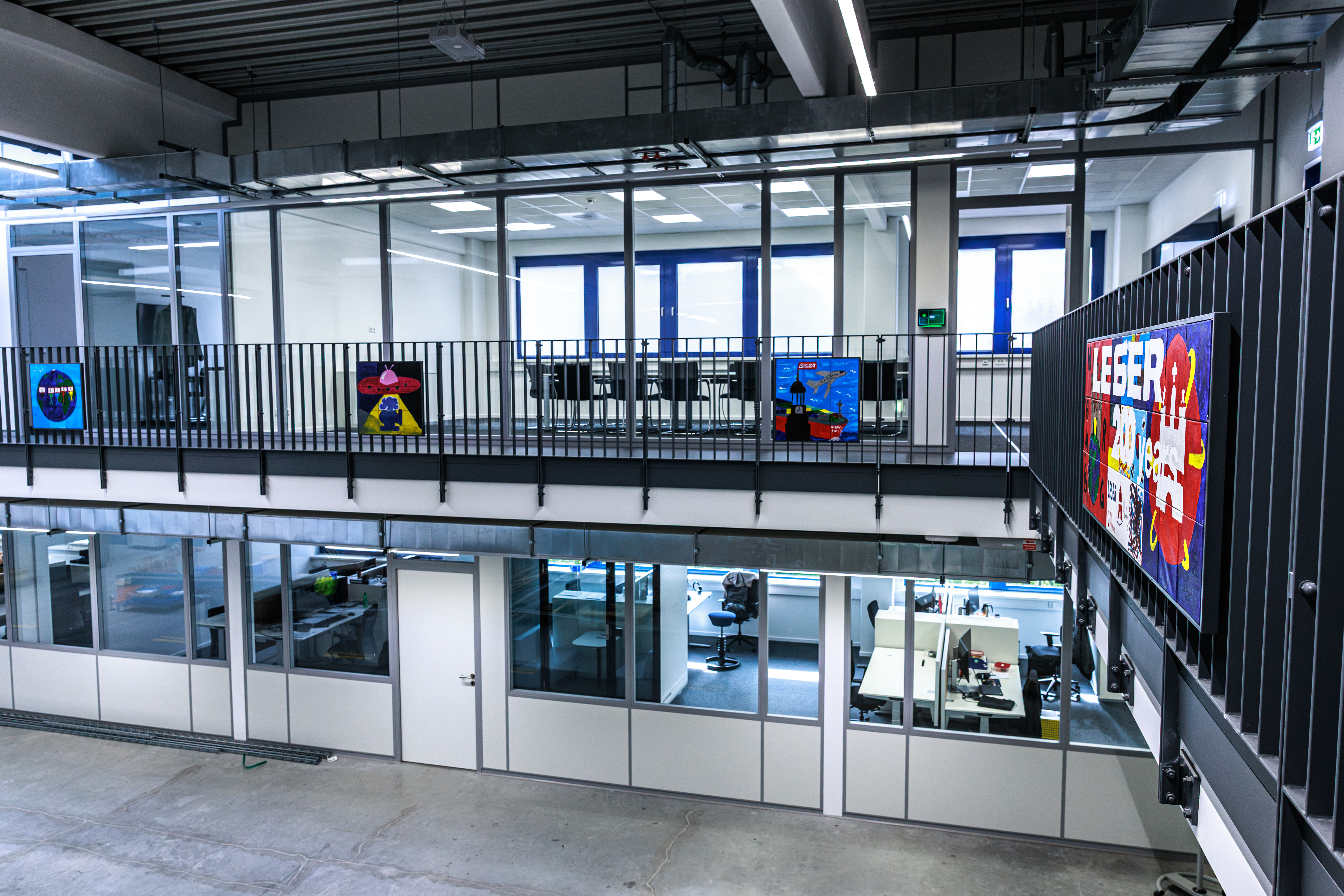
The new building houses office space for executive management, production management, production, industrial engineering, human resources, materials management, quality management, series management , information and communication technology, and the works council.
The proximity to the production area facilitates direct coordination between the various departments. The office spaces include workstations as well as meeting and communication areas equipped with the appropriate media technology. In addition, think tank areas are available for focused work and meetings.


Company cafeteria and break areas

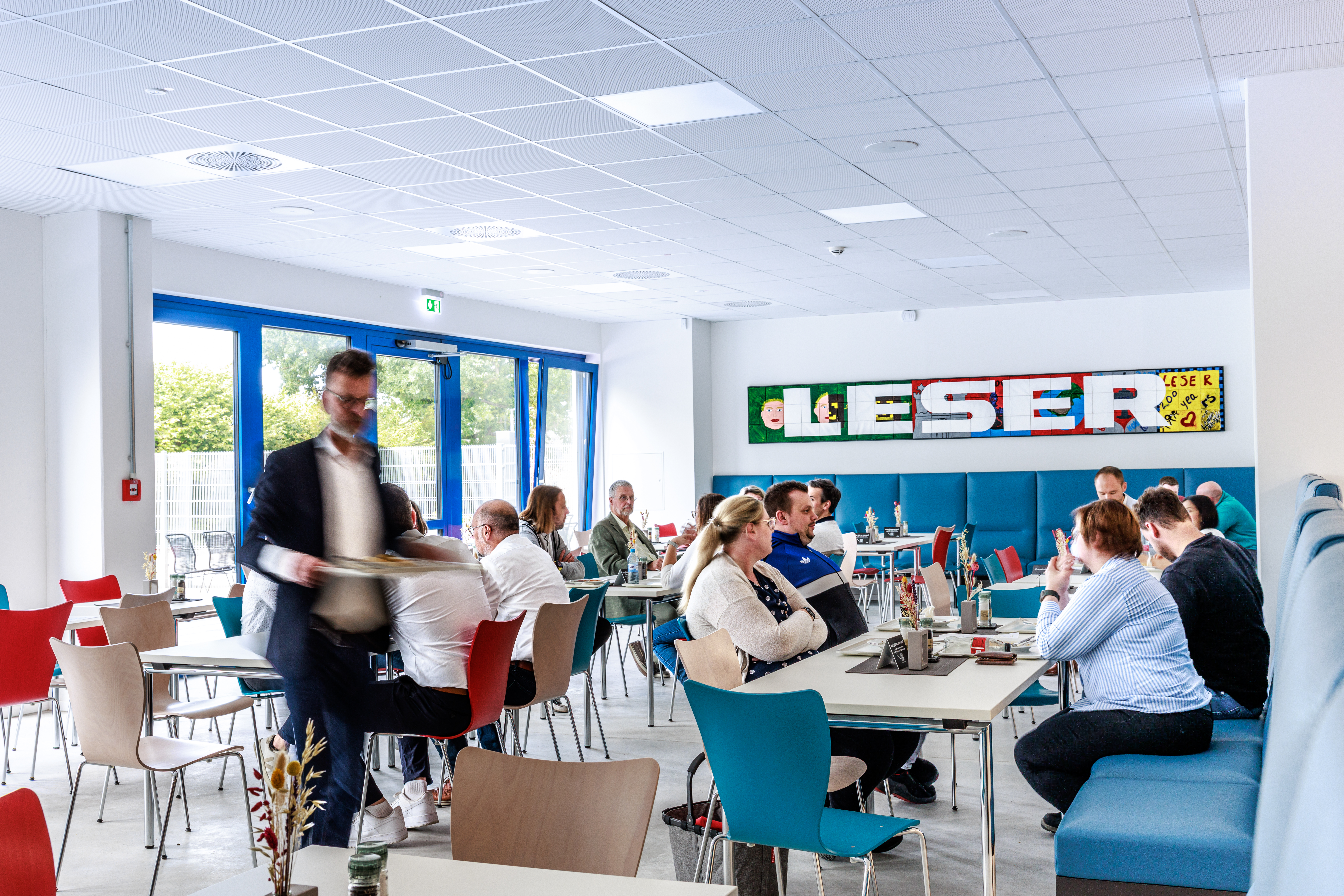
The new company cafeteria has its own kitchen for preparing hot and cold meals. The indoor area seats approximately 110 people . When the weather permits, the adjacent outdoor area can also be used.
The company cafeteria is open to employees and external visitors. As a social gathering place, it fosters interaction and communication among employees. By offering attractive benefits to LESER employees, it increases satisfaction, motivation, and employee retention at the Hohenwestedt location.

Parking and Transportation Access

As part of the site expansion, a parking facility with a total of 192 parking spaces was built. Access to the expanded production site is via the north side.

The Development of LESER in Hohenwestedt

Another milestone in the company's history

With the completion of the new production facility and the move in the summer of 2026, LESER is continuing the ongoing expansion of its production site in Hohenwestedt. Further expansion phases are planned through 2032.

LESER_Zeitstrahl_2026_DE

FAQ's

The new production facility in Hohenwestedt was completed in 2026. The move to the new premises took place in the summer of 2026.


LESER has expanded its production facility in Hohenwestedt by approximately 15,000 m². The investment totaled approximately 45 million euros. The additional space provides room for modern manufacturing technologies, optimized production processes, and further growth.

The expansion creates additional production capacity and enables more efficient material flows. Modern manufacturing technologies and automated processes support shorter lead times, a high degree of flexibility, and reliable delivery to our customers.

As part of its production expansion, LESER has invested in modern manufacturing and automation technologies. These include, among other things, an automated long-product warehouse with a direct connection to new sawing machines, as well as other automated manufacturing processes.

The new production facility is designed with an energy-efficient overall concept. Photovoltaic systems, air-source heat pumps, and the utilization of waste heat from machinery reduce energy consumption and support LESER’s goal of achieving CO₂ neutrality in Scope 1 and Scope 2 by 2035.

Yes. The production expansion, which will be completed in 2026, is part of a long-term site development plan. LESER plans further expansion phases in Hohenwestedt through 2032 to create additional capacity and ensure the production site is future-proof.

If you have any questions about the production site or the completed expansion, please contact LESER using the contact form.